The Hidden Signs of Stress in Dogs Most Owners Miss
When most people think of a stressed or reactive dog, they picture barking, lunging, or growling. But the truth is, those behaviors are just the final warning signs.
At Off Leash K9 Training Columbia SC, we focus on something deeper—reading the subtle signals dogs give before they escalate. These early stress indicators are easy to miss if you don’t know what to look for, but they make all the difference in successful training.
Understanding these signs allows us to step in early, adjust the situation, and help dogs stay calm instead of pushing them past their limits.
Let’s break down some of the most commonly missed stress signals.
Lip Licking: Not Always About Food
One of the most overlooked signs of stress is lip licking—especially when there’s no food involved.
Dogs will often flick their tongue quickly when they’re:
- Uncomfortable
- Unsure about a situation
- Trying to calm themselves down
This can happen when:
- A stranger approaches
- Another dog enters their space
- They feel pressure during training
It’s subtle and fast, which is why many owners miss it. But for trainers, it’s an early indicator that the dog is starting to feel uneasy.
Whale Eye: When the Eyes Tell the Story
“Whale eye” happens when you can see the whites of your dog’s eyes as they look at something without turning their head fully.
This usually means:
- The dog is uncomfortable with what they’re seeing
- They’re feeling conflicted (they want space but aren’t moving away)
- Stress is building
This is a big moment in training. A dog showing whale eye is often just a step or two away from reacting if the pressure continues.
Sniffing & Displacement Behaviors
Have you ever noticed your dog suddenly sniffing the ground in the middle of something important?
That’s not always curiosity—it’s often a displacement behavior.
Dogs will do this when they’re:
- Overwhelmed
- Trying to avoid a situation
- Unsure how to respond
Other displacement behaviors include:
- Turning their head away
- Scratching
- Moving slowly or freezing
To the untrained eye, it looks like the dog is being distracted or stubborn. In reality, the dog is saying, “I’m not comfortable right now.”
Yawning: A Critical (and Misunderstood) Signal
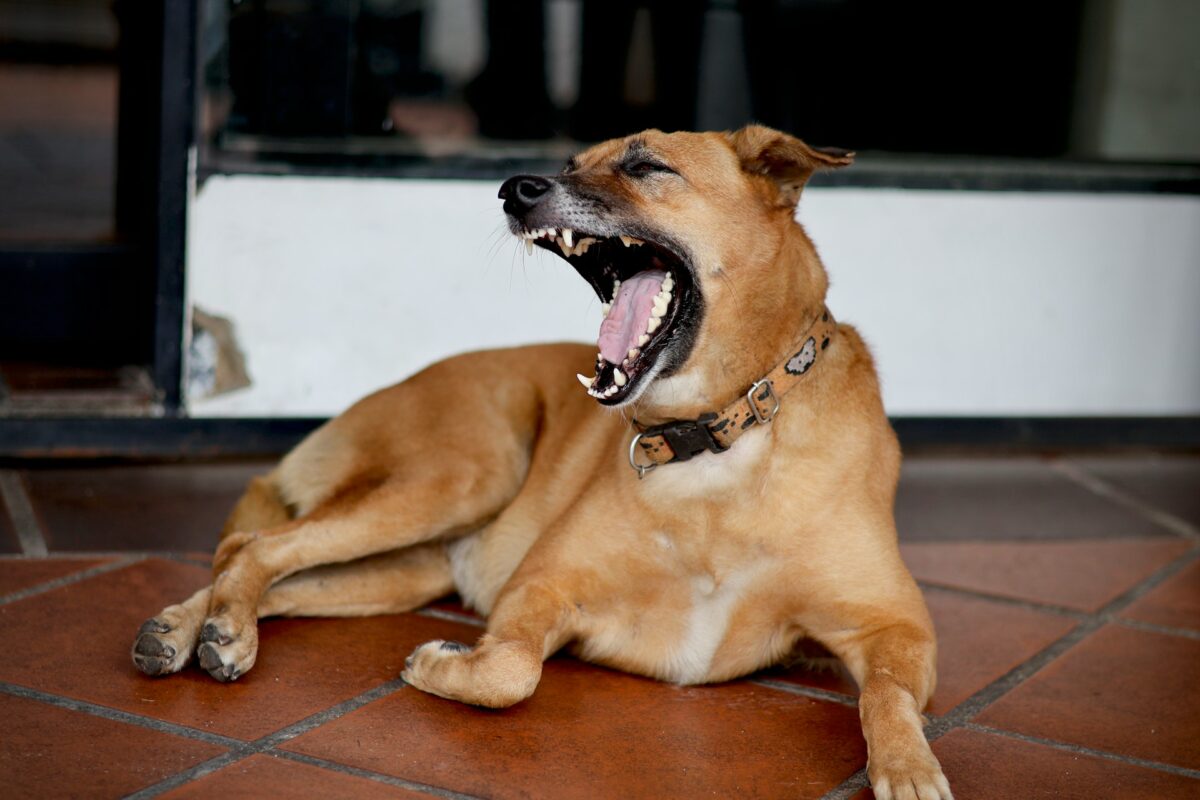
Yawning isn’t just about being tired—it’s one of the clearest stress signals a dog can give.
Dogs will yawn when they are:
- Nervous
- Processing pressure
- Trying to self-soothe
This is especially important during training sessions. A well-timed yawn can tell us:
- The dog is nearing their threshold
- It’s time to create space or reduce pressure
- We need to adjust the environment
Why Muzzle Fit Matters Here
If a dog is wearing a muzzle, this becomes even more important.
A properly fitted muzzle should allow the dog to:
- Fully open their mouth
- Pant comfortably
- Yawn without restriction
If the muzzle is too tight and prevents a full yawn, we lose a critical piece of communication. That means we can’t accurately read the dog’s stress level—and that can slow progress or even lead to setbacks.
Good training isn’t just about control—it’s about understanding what the dog is telling us in real time.
Why These Signs Matter in Training
Most reactive behaviors don’t come out of nowhere. Dogs escalate through stages:
- Subtle stress signals (lip licking, yawning, sniffing)
- Increased tension (stiff body, staring, whale eye)
- Reaction (barking, lunging, growling)
If you only address the final step, you’re always playing catch-up.
At Off Leash K9 Training Columbia SC, we focus on catching stress early so we can:
- Keep dogs under threshold
- Build confidence instead of fear
- Create clear, calm responses to triggers
The Difference Between Obedience and Understanding
Anyone can teach a dog to sit or stay. But real progress with reactive dogs comes from understanding why they behave the way they do.
When you learn to read:
- Lip licking
- Whale eye
- Displacement behaviors
- Yawning
You stop guessing—and start communicating.
That’s when training truly changes.
Final Thoughts
Your dog is always communicating, even when they’re quiet. The problem is, most of those signals are subtle—and easy to miss without the right guidance.
By learning to recognize early stress signals, you can:
- Prevent reactions before they happen
- Build trust with your dog
- Create safer, more controlled training experiences
And when tools like muzzles are used correctly—with proper fit and conditioning—they enhance that communication instead of limiting it.
Want to better understand your dog and stop reactivity before it starts?
Off Leash K9 Training Columbia SC is here to help you read your dog, build clarity, and create real, lasting results.